 English
 Français
 Nederlands
 Ελληνικά


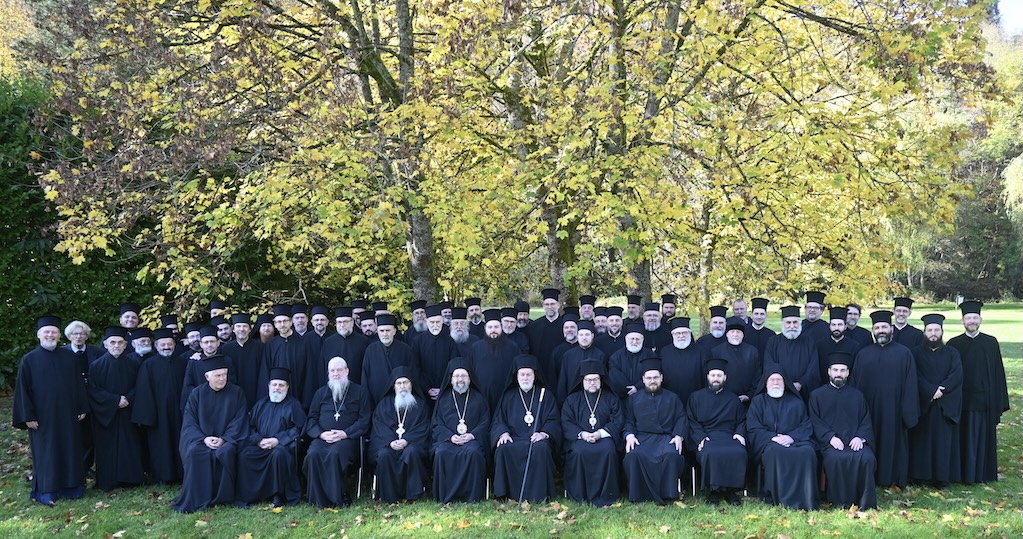
Tenth Annual Clergy Synaxis of the Sacred Metropolis of Belgium and Exarchate of the Netherlands and Luxembourg
“Orthodoxy Between Fundamentalism and Relativism”
From 28 to 30 October 2026, the tenth annual Clergy Synaxis of the Sacred Metropolis of Belgium and Exarchate of the Netherlands and Luxembourg (Ecumenical Patriarchate) was held in La Roche-en-Ardenne, Belgium, under the presidency of His Eminence Metropolitan Athenagoras of Belgium.
Over the course of three days, clergy from the three Benelux countries gathered in a spirit of prayer, fraternity and ecclesial communion to reflect together on a number of theological and pastoral challenges facing the Orthodox Church in contemporary society.
This year’s theme, “Orthodoxy Between Fundamentalism and Relativism,” followed on from the reflections of the 2025 Synaxis, which had been devoted to the reception and integration of new faithful into the Orthodox Church. The focus this year was on how to remain fully faithful to the Tradition of the Church while avoiding both the excesses of religious fundamentalism and the temptations of relativism.
The three invited speakers were His Grace Bishop Ambrosios of Argyropolis (Sacred Metropolis of Germany), the Reverend Hieromonk Antipas Karyotis (Mount Athos), and the Reverend Professor John Behr (Aberdeen and Nijmegen).
The Synaxis opened on Wednesday, 28 October, with an inaugural prayer and the reading of a message from His All-Holiness Ecumenical Patriarch Bartholomew, addressed to Metropolitan Athenagoras and all the participants. In his message, the Patriarch emphasized the importance of such fraternal gatherings for the spiritual renewal of the clergy and the deepening of their pastoral mission. Reflecting on the theme of the Synaxis, His All-Holiness recalled that fundamentalism and relativism, although apparently opposed, both undermine the dignity of the human person: the former by restricting human freedom, and the latter by weakening the relationship with truth. The Orthodox Church, he stressed, does not seek a compromise between these two extremes, but bears witness to the truth in Christ, lived in freedom and in the communion of love. He notably stated: “Love does not relativize truth, but reveals its life-giving power.” The Patriarch also emphasized the responsibility of priests, who are called to be spiritual guides and well-educated theologians, capable of accompanying the faithful, particularly young people, in their search for meaning and hope. In the multicultural context of the Benelux countries, he encouraged Orthodox communities to become places of prayer, hospitality and solidarity, where diversity of languages and backgrounds finds unity in the common faith. Finally, His All-Holiness warmly congratulated Metropolitan Athenagoras on his pastoral dedication and his constant concern for the formation of the clergy, expressing the gratitude of the Mother Church to the priests for their faithfulness and ministry.
Following the reading of the Patriarchal message, His Eminence Metropolitan Athenagoras delivered his opening address, welcoming the speakers and members of the clergy and recalling the importance of this annual gathering as an expression of the unity of the Holy Metropolis and its communion with the Mother Church of Constantinople. In his address, the Metropolitan highlighted two dangers threatening ecclesial life today: on the one hand, fundamentalism, which risks transforming faith into a rigid system of rules and exclusions; and on the other, relativism, which tends to deprive the Gospel message of its essential meaning. He recalled that authentic Orthodoxy does not consist in a compromise between these two extremes, but in seeking the “royal way” of spiritual discernment, in which truth remains inseparable from love, freedom and humility. In this context, he referred to the exhortation of the Apostle Paul to “speak the truth in love” (Eph. 4:15). The Metropolitan also stressed the importance of ecclesial unity, synodality and respect for episcopal authority, recalling that fidelity to Tradition cannot justify individual initiatives contrary to the canonical order of the Church. Addressing several concrete pastoral questions, including the different ways in which non-Orthodox Christians are received into the Orthodox Church and the celebration of the baptism of children, he emphasized the need for pastoral care characterized by discernment, responsibility and mercy. Finally, he recalled that the Orthodox Church in the Benelux countries must not confine itself to preserving national or cultural identities, but must above all be a living Eucharistic community, open to all who seek Christ.
The first day also included a presentation of “Filoxenia,” the central charitable organization of the Holy Metropolis, as well as an opportunity for the participants to become acquainted with one another.
The first lecture was delivered by Hieromonk Antipas Karyotis, on the theme “Orthodoxy Between Fundamentalism and Relativism: Discerning the Royal Way.” Drawing upon Holy Scripture and the patristic tradition, the speaker demonstrated how these two opposing tendencies, each in its own way, risk distancing the human person from the authentic experience of truth in Christ. The “royal way,” he explained, is not merely a moderate position between two extremes, but a transcendence of both through discernment, spiritual freedom and personal communion with God. Christian truth cannot be reduced to an ideology or a collection of abstract formulations: it is a reality lived in relationship with Christ.
On Thursday, 29 October, following the service of Matins, His Grace Bishop Ambrosios of Argyropolis (Sacred Metropolis of Germany) delivered a lecture entitled “Living Tradition: Fidelity, Discernment and Renewal.” He highlighted the living and dynamic character of ecclesial Tradition, which does not consist in the static preservation of the past, but in the active presence of the Holy Spirit in the life of the Church. Referring in particular to the thought of Father John Meyendorff, he emphasized the need to distinguish Holy Tradition from the various human and historical traditions. Genuine fidelity to the apostolic faith does not exclude renewal, provided that such renewal remains rooted in the authentic experience of the Church and in the continuity of her faith.
The participants then divided into language groups, allowing for in-depth discussions with the speakers and an exchange of pastoral experiences from the various parishes of the Holy Metropolis.
The afternoon was devoted to a round-table discussion addressing three particularly relevant questions. His Grace Bishop Joachim of Apollonia explored the relationship between spiritual authority and personal freedom in contemporary pastoral ministry. Archimandrite Philadelphos Kafalis, chancellor, presented the different canonical ways in which non-Orthodox Christians may be received into the Orthodox Church, while Father Barnabas Genbrugge addressed the challenges of transmitting the faith to younger generations, emphasizing the need to pass on the faith without imposing it, and to welcome others without falling into relativism.
These presentations gave rise to lively exchanges, which continued in the various language groups. Their principal reflections were subsequently shared with all the participants.
On Friday, 30 October, following Matins, the Reverend Professor John Behr delivered the third lecture, entitled “The Pastoral Challenge in a Pluralistic Society.” In a deeply biblical and patristic reflection, he demonstrated that Orthodoxy does not simply occupy a middle position between fundamentalism and relativism, but finds its true foundation in the mystery of the Cross of Christ. Christian truth is not an ideological system that can be imposed upon others: it is revealed in the person of the crucified Christ and manifested in self-giving love. Pastoral ministry is therefore called to bear witness to this truth with humility, in a spirit of service, sacrifice and respect for every human person.
The proceedings continued with discussions devoted to several practical matters concerning parish life, parish organization and the pastoral care of the faithful. During a separate meeting with his clergy, Metropolitan Athenagoras addressed various issues relating to ecclesiastical administration, canonical discipline and pastoral cooperation within the Holy Metropolis.
The Synaxis concluded with a general discussion during which the three invited speakers had the opportunity to answer questions from the participants and share their final reflections.
At the end of these three days, a common conviction emerged: the Orthodox Church is called to remain fully faithful to her apostolic faith while remaining open to contemporary humanity, without yielding either to the rigidity of fundamentalism or to the weakening of her identity through relativism. Spiritual discernment, Eucharistic communion, personal freedom, love and pastoral responsibility emerged as essential dimensions of Orthodox witness in the world today.
In his closing remarks, His Eminence Metropolitan Athenagoras warmly thanked the three guest speakers for the richness of their contributions, as well as all the members of the clergy for their active participation and the spirit of fraternity that had characterized the gathering.
The tenth Clergy Synaxis concluded with a common prayer, in the hope that the reflections and exchanges of these days will contribute to strengthening ecclesial unity and renewing the pastoral mission of the Orthodox Church in Belgium, the Netherlands and Luxembourg.